

Perhaps your kids have already tried a micro:bit in class or started coding with Scratch in an after-school club. If they are showing an interest in coding, continuing that learning at home can be a great way to build confidence and momentum.
Robotical Cog is a simple and engaging way to support that journey. It helps reinforce the digital skills children are already developing at school through hands-on, playful learning that takes coding off the screen and in to the real world.
Robotical Cog is a great first step towards a lifelong interest in STEM. It introduces core coding concepts in a practical way, helping children build an understanding of skills that are valuable not only for future STEM careers but in an increasingly digital world, a range of sectors.
What is Physical Computing? And Why is it Important?
Physical computing is the process of bridging the digital world and the physical world using hardware and software.
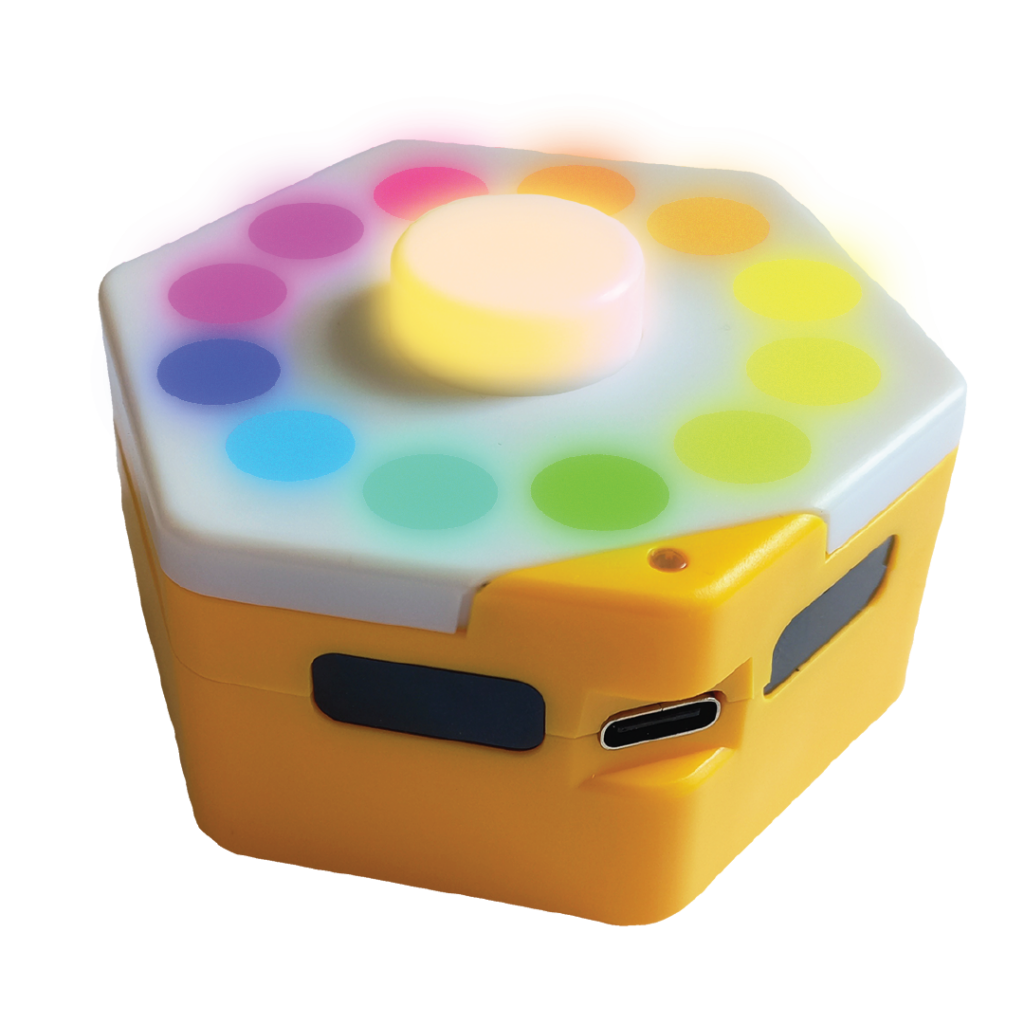
Robotical Cog is a great example of this in action. It allows children to use physical inputs and outputs such as sound, light, movement, and touch to interact with what is happening on screen.
For example, you could:
- Make Cog play a sound when a button is pressed
- Light up its LEDs when it is shaken
- Tilt Cog to control a sprite on screen
Instead of code only changing what happens on a screen, physical computing lets code react to and influence the real world. This makes programming more intuitive and easier to understand, while also making it more engaging and creative.
Using Robotical Cog to Teach Coding
Starting at £20 / $28, Cog is an affordable way to introduce children to physical computing at home.
The free Robotical app includes guided activities designed to support younger learners as they explore coding step by step.
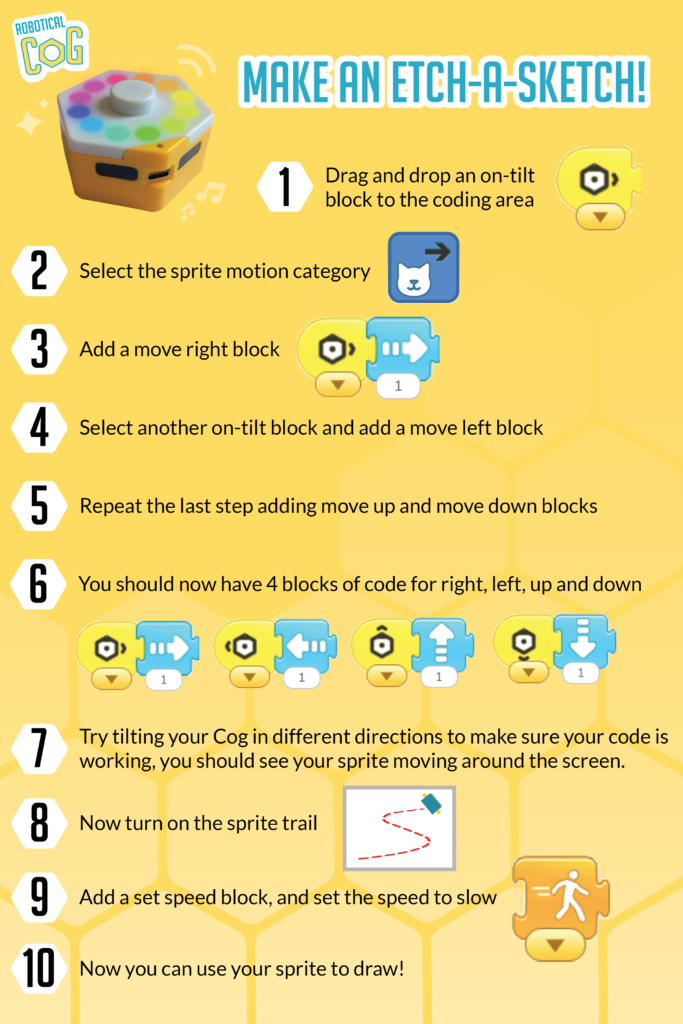
For example, children can use Cog to create an Etch-a-Sketch style drawing tool. This is a fun project, but it also introduces important concepts such as cause and effect, sequencing, and parallel code.
Coding Online with the Robotical App
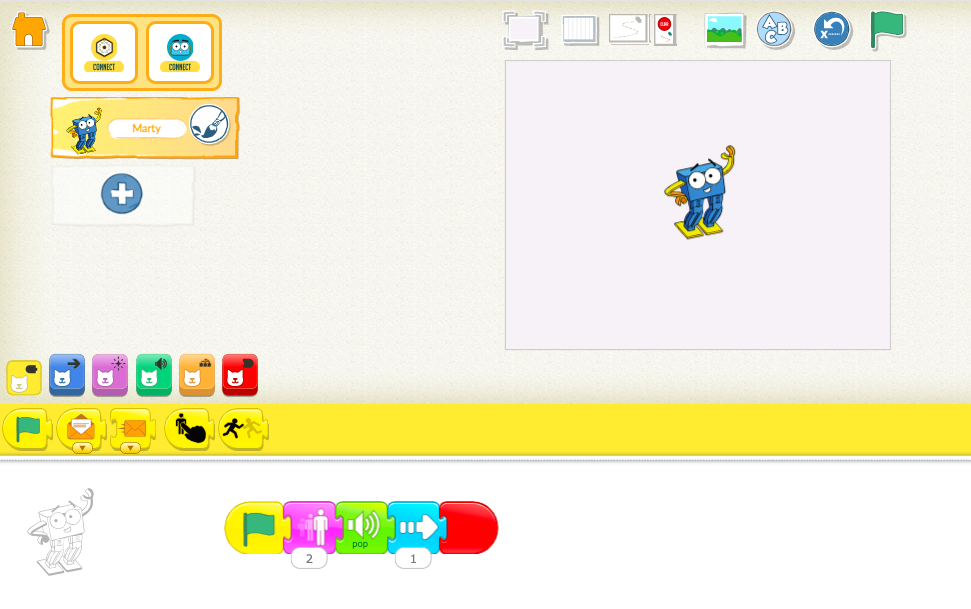
Blocks Jr. by Robotical is a creative, story driven platform that allows children to build interactive scenes using characters that can move, speak, and respond on screen. It introduces key coding concepts through an icon-based drag and drop system, where each block represents an action or behaviour. By connecting blocks together, children can control movement, interaction, and repetition, while naturally exploring sequencing, loops, and simple functions.
Learners can customise almost every part of their creations, from character appearance and backgrounds to sound recordings and text. This makes the experience highly creative while still building strong computational thinking skills.
Blocks Jr. offers a balance between creativity and early coding, making it ideal for younger learners who benefit from a visual or story-driven approach.
The Robotical web app also means children can access Blocks Jr. online for free, making it easy to get started anywhere.
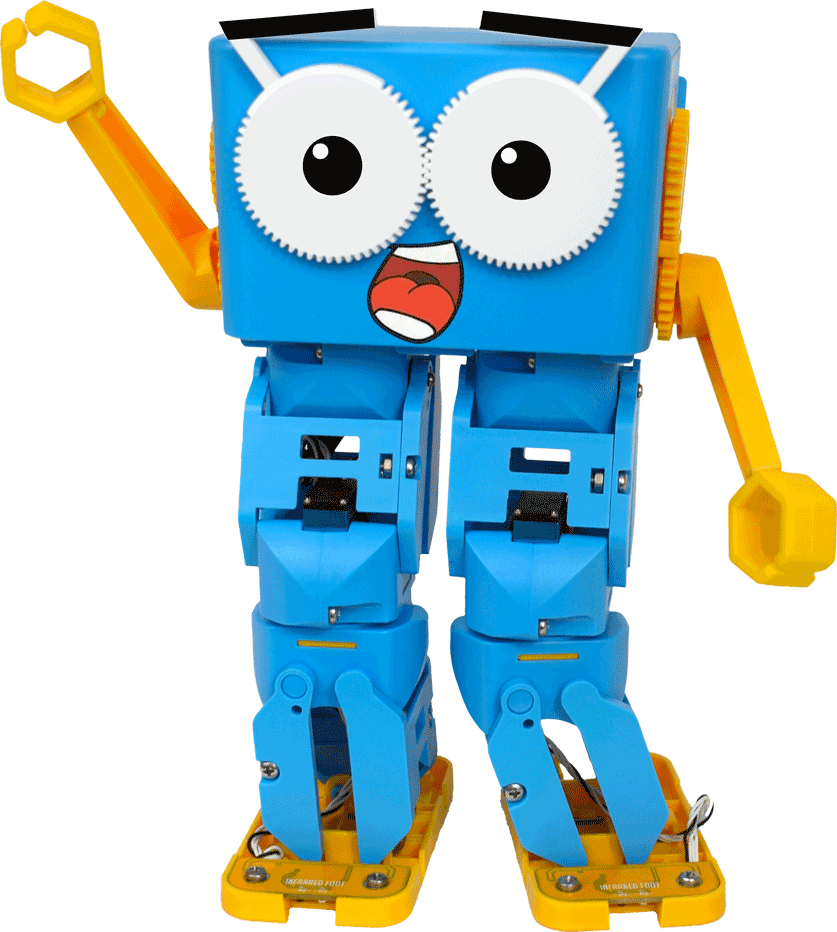
Marty the Robot
Once students are confident with the basics of coding, they may be ready to move on to a more advanced physical computing platform.
This is where Marty comes in.
With multiple motors, servos, and options for additional sensors, Marty provides a hands-on robotics platform that supports more complex programming and engineering concepts. Working with a physical robot helps learners develop, test, and debug code in a tangible way, reinforcing key ideas such as control, sensing, and feedback in a way that screen-based coding alone cannot.
Marty has been designed with schools in mind. We offer free two-week trials for schools across the UK and US, giving teachers and students the opportunity to explore how Marty can bring STEM learning to life in the classroom.
If you would like your child’s school to try Marty, we have created a short PDF that you can share with them explaining how it can support STEM learning.
 About Us
Other posts you may like
A Scratch Alternative for Schools: Meet the Free Robotical App
Scratch is one of the best-known coding platforms for children. Its block-based programming environment has helped make coding accessible to millions of young people, and many teachers around the world...
Why is AI Literacy Important?
As we mark AI Literacy Day, it is worth asking a crucial question: why does AI literacy matter so much for today’s students? It's a fundamental part of the digital...
Why Probeware Matters in Science Education
In today’s classrooms, hands-on learning is essential. Students learn best when they can see, measure, test, and experience concepts directly. That’s where probeware comes in. By giving learners the tools...
TRY MARTY
FOR FREE
Are you looking for new STEM resources for your classroom? Robotical are loaning Marty the Robot to schools for no-obligation, 2 week trials.