About Us

A Robot for Coding, AI and Real-World Digital Skills
From block coding to Python with possibilities for hardware expansion and machine learning, Marty grows with students as their skills develop.
From block coding to Python with possibilities for hardware expansion and machine learning, Marty grows with students as their skills develop.
Marty provides a robust, hands-on platform for teaching coding, robotics, and engineering using approaches aligned with real-world robotics practices. Working with a physical robot allows learners to develop, test, and debug code in a tangible way, reinforcing core programming concepts such as control, sensing and feedback in a way that screen-only coding cannot.
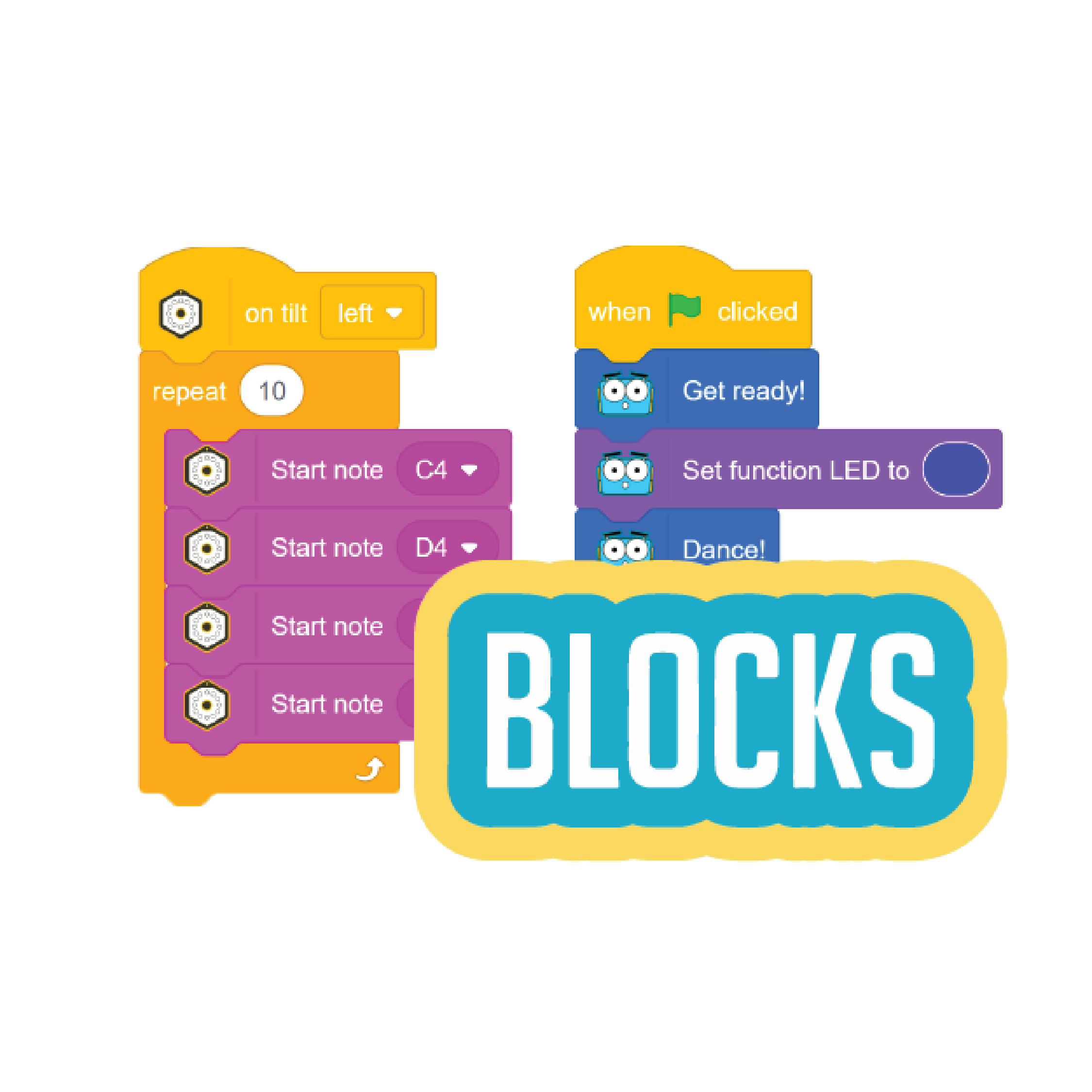
The free Robotical App offers multiple programming environments to support progression toward industry-standard workflows. Learners can begin with a Scratch-based Blocks environment designed to scale to longer, more complex programs, before advancing to Python for greater control, modular code, and collaborative projects such as synchronised multi-robot behaviours. Marty can be extended using Raspberry Pi, micro:bit, and additional sensors, enabling learners to work with real hardware interfaces. Support for AI and machine learning through image and speech models further allows exploration of modern robotics techniques used in industry and research today.
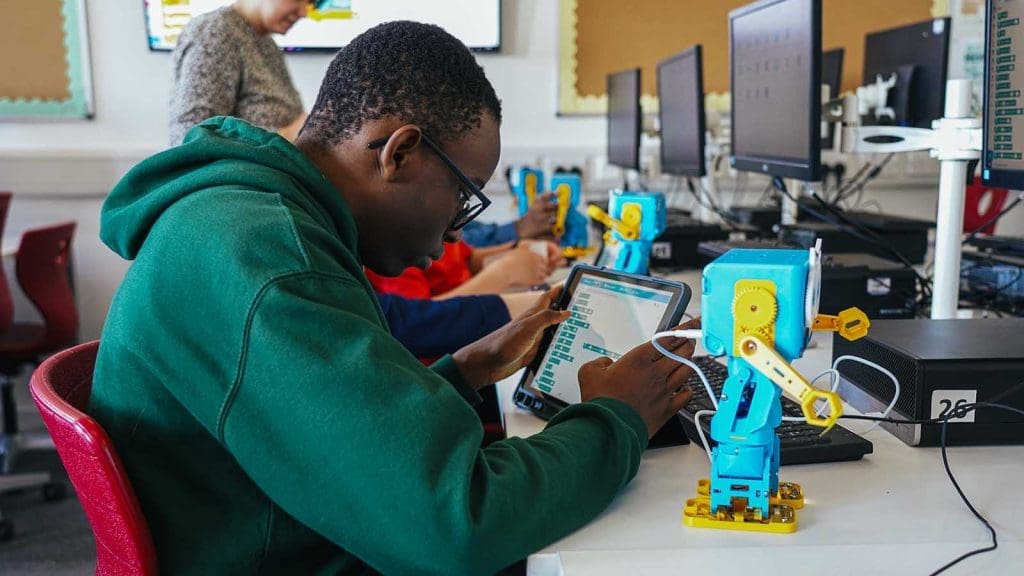
The Robotical App offers a multitude of ways to code and learn with Marty. The best part? Our app is completely free with no logins or subscriptions. You can start exploring Marty straight out of the box, with minimal setup and zero hassle.
Alongside the app, the Robotical Learning Portal also offers free lesson plans to get you and your students coding Marty quickly and confidently.
Explore our advanced coding environments to find the right level for your students:
Blocks offers a scalable, visual coding environment that introduces advanced programming concepts without requiring prior text-based experience. Using a vertical, Scratch-based interface, learners can create longer, more complex sequences. Blocks provides a solid foundation for transitioning into text-based programming and robotics workflows used in industry.
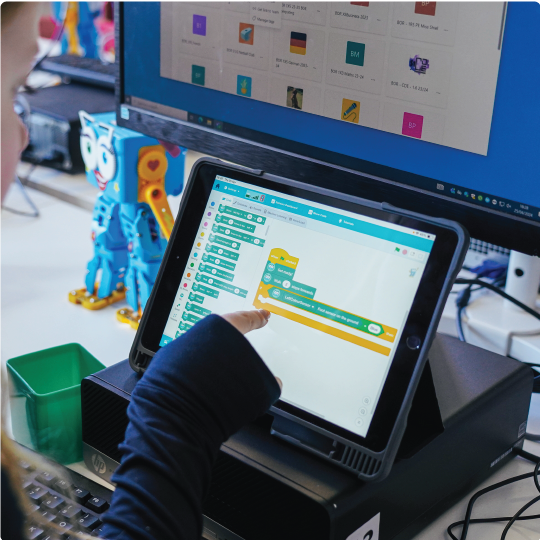
Python unlocks full, text-based programming for learners ready to move beyond visual blocks. With Python, students gain more precise control over Marty’s sensors, motors, and behaviour, while learning syntax, functions, and debugging techniques used in professional robotics. Python projects can be extended to include multi-robot control, bridging classroom coding to real-world software development practices.
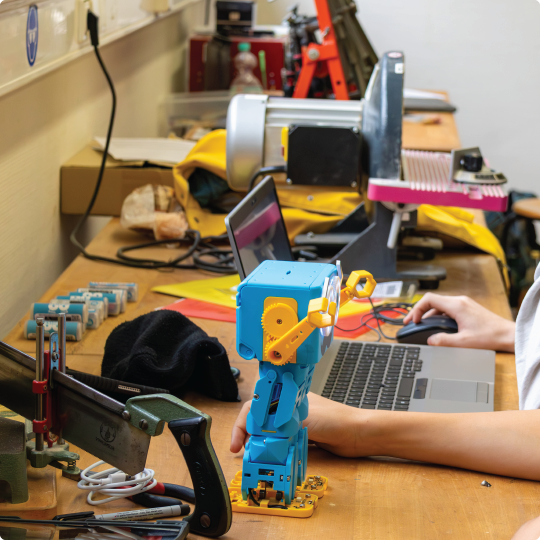
Marty integrates seamlessly with external hardware such as Raspberry Pi, micro:bit, and a range of sensors, giving learners hands-on experience with real robotics components.
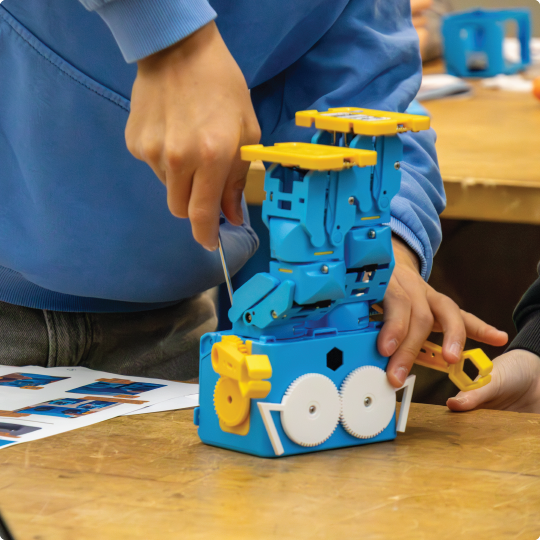
Marty’s compatibility with ROS (Robot Operating System) gives learners a first look at the tools used by professional roboticists. After exploring Python and external hardware, students can use ROS to experiment with more advanced robotics concepts like coordinating multiple systems, connecting sensors, and managing robot behaviours. This hands-on experience with ROS introduces the same frameworks and workflows used in research, competitions, and real-world robots, helping learners see how classroom coding connects to industry robotics.
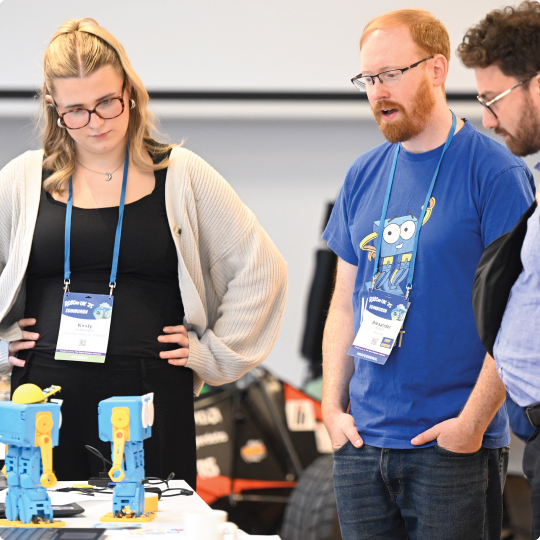
What Do Teachers Think?
say Marty makes learning fun.
see Marty as a valuable investment.
would recommend Marty to other educators.
saw increased STEM proficiency.
If you’re an educator in the US or UK, please fill in the form below to request a free, no obligation, two-week free trial.